
By Hebrews Pouyeli Kumako
Amid rising tensions and conflicts among fishing communities along the Keta Basin coastline, a leading fisheries advocate has called for strategic regulation—not blanket confrontation—of illegal fishing methods to restore declining fish stocks and end the growing “fishing wars” in the Volta Region.
In an exclusive interview with News Volta, Mr. Pazzy Wisdom Mordedzi, National Secretary of the Small Pelagic Cold Management Communities (SPCC) and a member of the Canoe and Fishing Gears Owners Association of Ghana (CaFGOAG), explained that both poly undersize net fishing and light fishing are illegal under Ghana’s fisheries laws, but argued that controlled and well-regulated use could help revive marine life in the Keta Basin.
Anchovy: The Backbone of the Keta Basin Fishery
Mr. Mordedzi described anchovy, locally celebrated as “Keta School Boys,” as the backbone of fisheries in the Volta Region. He noted that anchovy is not only a highly nutritious food widely consumed by households and school children, but also a critical food source for larger fish species.
“Once anchovy disappears, the entire marine food chain collapses,” he said.
Historically, fishers along the Volta coast relied on traditional fishing methods, including:
- Seine nets (Yevuɖɔ),
- Encircling nets (Watcher),
- Set nets (Aɣliɖɔ),
- Hook and line (Eƒu dodo).
These nets were designed with graduated mesh sizes that allowed juvenile fish to escape and mature. In the past, fishers often recorded bumper harvests, sometimes distributing excess catches to neighbouring canoes.
How Poly Undersize Nets Changed Everything
According to Mr. Mordedzi, the turning point came about 17 years ago with the introduction of poly undersize nets, locally called “Poli”.
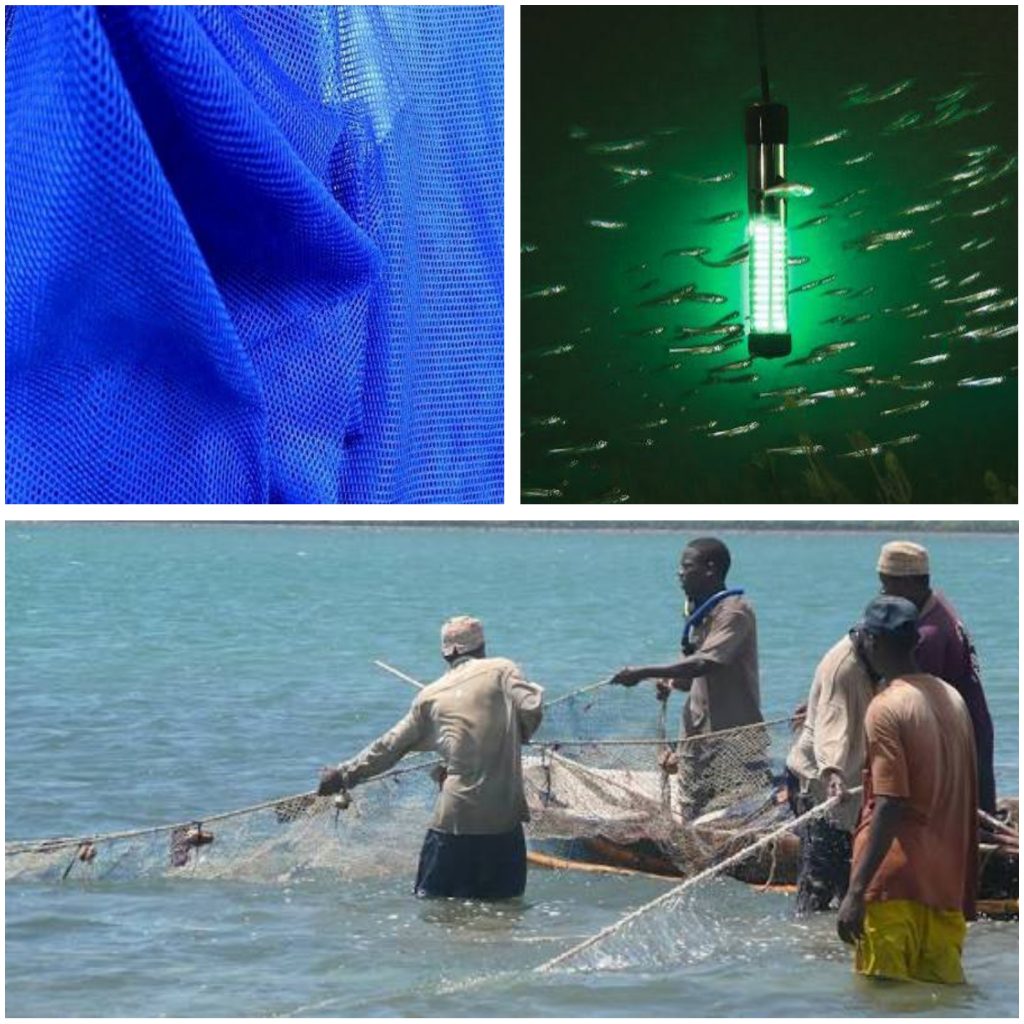
Originally, only 50 yards of ⅜-inch mesh were attached to Watcher or Seine nets to target anchovy during peak seasons. However, this practice has since escalated dangerously.
“Today, Poli nets have grown from about 500 to 600 yards to over 1,000 yards in length, with depths reaching 50 yards,” he revealed.
He said the widespread and unregulated use of these nets now captures everything in the water, including juvenile fish, preventing stock regeneration and creating unfair competition for fishers using traditional nets.
“What makes it worse is that some people now use mesh sizes smaller than ⅜ inch. That is pure destruction,” he stressed.
Ripple Effects on Marine Life and Livelihoods
Mr. Mordedzi warned that overfishing anchovy has directly led to the disappearance of larger fish species such as barracuda and cassava fish, which depend on anchovy as their primary food source.
“In the past, when anchovy was plenty, big fish were common. Today, some of those species are no longer seen in our waters,” he said.
He added that the dominance of poly nets has marginalised traditional fishers, fueling resentment, conflict, and violent confrontations along the coast.
Light Fishing: Effective But Should be Checked
Touching on light fishing, Mr. Mordedzi acknowledged that the method can be effective but warned that excessive and uncontrolled use disrupts marine ecosystems, alters fish behaviour, and leads to indiscriminate harvesting.
“Light fishing Can be abused, but it can be regulated,” he noted, adding that unregulated light fishing contributes significantly to overfishing and ecosystem imbalance.
A Call for Regulation, Not Chaos
Rather than total suppression, Mr. Mordedzi proposed a rotational regulation system, similar to what exists in Togo, Ghana’s eastern neighbour.
His recommendations include:
- Allowing poly undersize nets for only six months in a year to protect spawning periods,
- Restricting light fishing to three months annually, particularly between November and January,
- Enforcing agreements such as the November 22, 2024 Elmina resolution, which permits Poli net fishing from September to February only,
- Supporting alternative livelihoods during closed periods.
“This approach protects juvenile fish, allows stocks to recover, and ensures fairness among fishing methods,” he explained.
Condemnation of Violence and Canoe Burning
Mr. Mordedzi strongly condemned the burning of canoes at the Denu Landing Beach, describing it as a dangerous escalation that threatens lives and livelihoods.
“Conflict cannot solve fisheries problems. Burning canoes is criminal and only deepens divisions,” he stated.
He called on chief fishermen, canoe owners, regulatory bodies, and government agencies to work together to enforce the law peacefully and fairly.
A Shared Responsibility
Mr. Mordedzi concluded that while poly nets and light fishing are illegal under Ghana’s Fisheries Act, they have become entrenched in the system and must be strategically controlled rather than ignored or politicised.
“The survival of anchovy, the recovery of larger fish species, and the future of fishing in the Keta Basin depend on cooperation, regulation, and respect for both science and tradition,” he said.
He emphasized that reviving fish stocks is a collective responsibility, requiring leadership from government, discipline from fishers, and sustained community engagement to protect the Volta Region’s marine future.
Source News Volta