By Hebrews Pouyeli Kumako
President John Dramani Mahama has announced sweeping reforms and historic investments in Ghana’s health sector, raising total health financing to GH₵34.7 billion, as part of efforts to strengthen health sovereignty, improve service delivery, and expand access to quality healthcare.
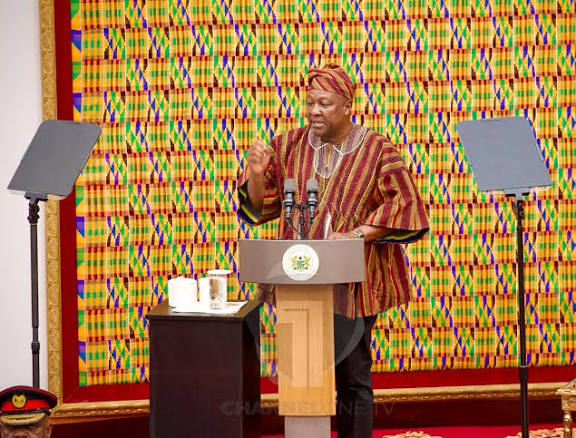
Delivering the State of the Nation Address (SONA) on February 27, 2026, and monitored by News Volta, the President said the massive funding reflects government’s strong commitment to domestic health financing and sustainable healthcare systems.
Tackling Non-Communicable Diseases
President Mahama revealed that non-communicable diseases (NCDs) now account for over 40% of all deaths in Ghana and remain a major driver of household poverty. To confront this challenge, government has established the Ghana Medical Trust Fund — the first nationwide financing mechanism dedicated to chronic and non-communicable diseases.
“This bold initiative will ensure long-term financial protection for families battling chronic illnesses,” the President stated.
Major Reforms in NHIS
The President announced that the National Health Insurance Levy has been uncapped, ensuring improved funding flow. Claims payments to health facilities are now timely, eliminating the long-standing problem of six-month payment delays.
Government is also finalizing measures to increase provider tariffs by over 100%, to reflect realistic treatment costs. As a result, NHIS enrolment has risen from 57% in early 2025 to 66% today, signaling renewed public confidence.
Expanding Health Workforce
Ghana’s health workforce density has increased sharply from 15.6 per 10,000 people in 2025 to nearly 42 per 10,000, while public sector health employment has doubled to about 200,000 workers.
President Mahama disclosed that upon assuming office, 103,000 trained health workers were awaiting placement. Over the past year, 13,500 nurses and midwives, along with hundreds of doctors and pharmacists, have now been absorbed onto the public payroll.
Nursing trainee allowances have been restored, application fees reduced, and the No-Fees Stress Initiative expanded to improve access to training. Government will further expand recruitment and correct staff imbalances through targeted incentives for postings to underserved areas.
Specialist Training and Advanced Care
To match Ghana’s changing disease profile, new postgraduate nursing programmes will be introduced in cardiology, nephrology, endocrinology, and oncology, alongside the expansion of emergency and critical care nursing. At least 30 nursing training institutions will benefit from enhanced capacity building, supported by new PhD-level scholarships.
Health Infrastructure and Hospital Expansion
President Mahama reaffirmed government’s commitment to completing abandoned health projects. Budgetary provision has been made to commence construction of regional hospitals in Oti, Savannah, and Western North Regions, improving access to quality healthcare.
Pharmaceutical and Vaccine Production
Government has allocated $50 million in seed funding to the National Vaccine Institute to strengthen local vaccine and pharmaceutical manufacturing. A Ghanaian company has already secured authorization to produce snake venom antiserum locally, while production of tetanus-diphtheria vaccines is expected to begin this year through a partnership with an Indonesian firm.
Immunization and Disease Control
To strengthen disease prevention, immunization funding for children and pregnant women was increased by 46% in 2025, exceeding $171 million, enabling Ghana to fully finance all vaccines and reduce outbreak risks.
The HPV vaccine will be introduced nationwide this year to protect young girls against cervical cancer.
HIV/AIDS and Primary Healthcare
President Mahama disclosed that 350,000 Ghanaians are currently living with HIV/AIDS, with a national prevalence rate of 1.6%. The Ghana AIDS Commission has been tasked to ensure strict accountability in testing and antiretroviral treatment delivery.
Government will also fully roll out a free primary healthcare programme in 2026, removing all cost barriers at the primary care level and strengthening disease prevention systems.
The President appealed to health workers to accept postings to underserved communities, assuring them of improved working conditions, infrastructure, and logistical support.
“These reforms represent a new era for Ghana’s healthcare system — one built on equity, efficiency, innovation, and national resilience,” President Mahama concluded.
Source News Volta I Monitoring Desk