By Hebrews Pouyeli Kumako
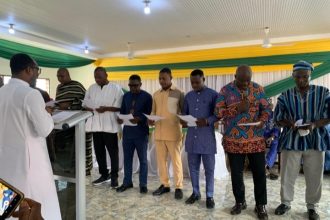
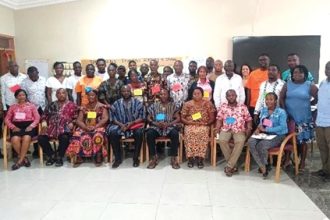
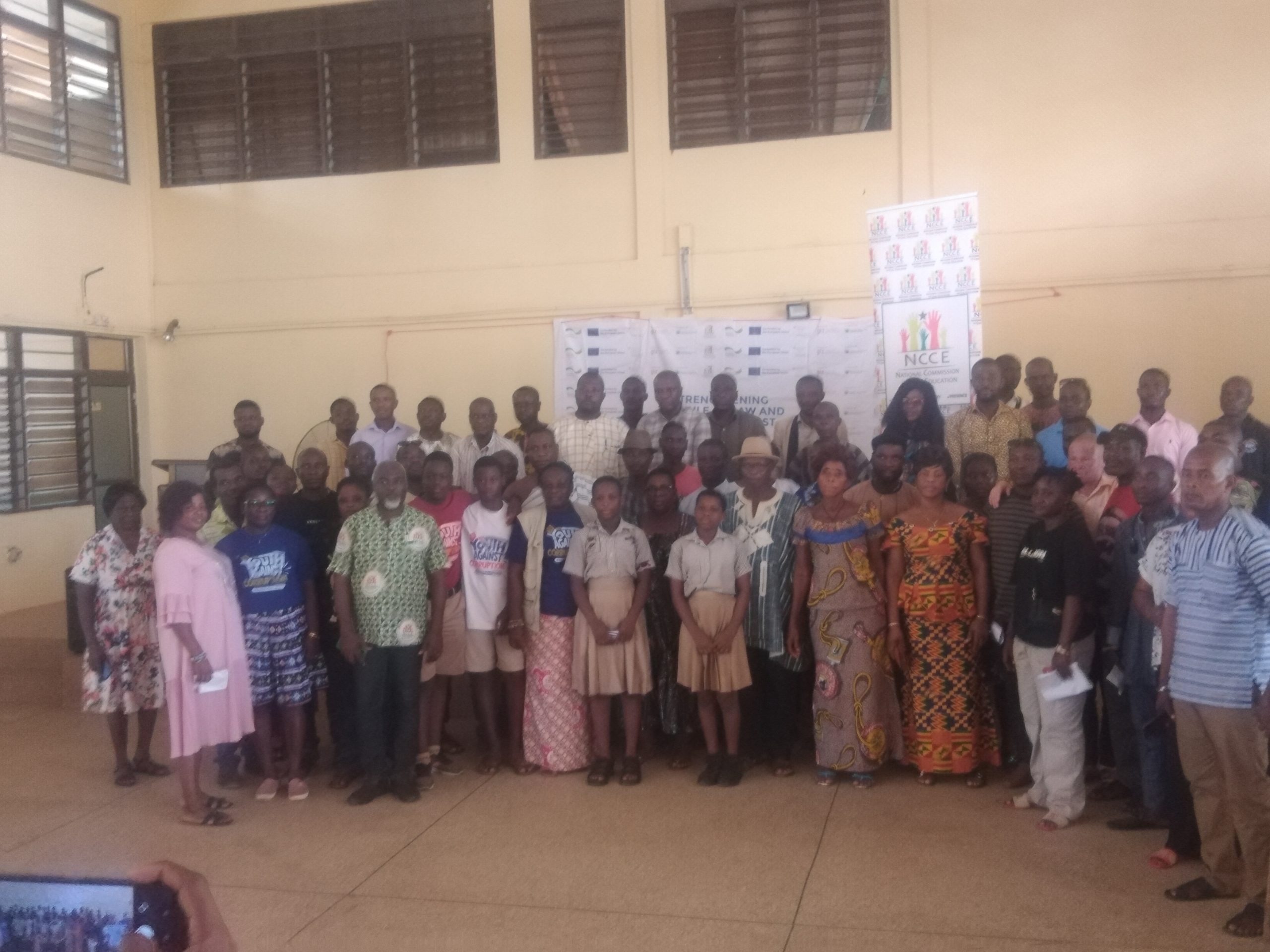
The National Commission for Civic Education (NCCE) in the Ketu South Municipality has held a Social Auditing engagement with community members, duty bearers, and officials of the Municipal Assembly, aimed at deepening public accountability, transparency, and citizen participation in governance.
The programme, organized under the Civic Engagements on the Rule of Law and the Fight Against Corruption Project, brought together residents, assembly members, public officers, and civil society actors to discuss practical ways of monitoring public service delivery and promoting responsible governance at the local level.

Speaking at the event, NCCE Ketu South Director, Mama Hodzige II, emphasized that social auditing is a powerful tool for empowering citizens to actively participate in governance by monitoring public projects, tracking public funds, and demanding accountability from duty bearers.
She explained that the engagement seeks to build informed communities that can question decisions, assess development outcomes, and engage constructively with authorities to ensure that public resources are used for their intended purposes.
“When citizens understand their rights and responsibilities, they become active partners in development. Social auditing gives communities the voice and confidence to demand transparency and accountability,” she stated.
The Ketu South Municipal Auditor, Mr. Benjamin Kwasi Tetteh, delivered a detailed presentation on accountability, lifestyle auditing, and social corruption.
He explained that lifestyle auditing involves examining the standard of living of public officers in relation to their legitimate income, stressing that unexplained wealth often raises red flags about corruption.
Mr. Tetteh further outlined what constitutes social corruption, describing it as unethical practices embedded in daily social interactions, including:
- Bribery and inducements
- Nepotism and favoritism
- Abuse of office
- Conflict of interest
- Misuse of public resources
- Unofficial payments for public services
He urged citizens to reject such practices and support accountability institutions by reporting suspected wrongdoing.
“Corruption is not only about stealing money; it also includes abuse of power, favoritism, and misuse of public office. When we normalize these acts, we weaken our democracy,” he cautioned.

A representative from the Commission on Human Rights and Administrative Justice (CHRAJ), Mr. Lenyibe Winfrey, took participants through public accountability mechanisms, focusing on citizens’ rights to lodge complaints and seek redress.
She educated participants on the procedures for reporting corruption, maladministration, abuse of power, and human rights violations, emphasizing that CHRAJ remains accessible to all citizens regardless of status.
Ms. Winfrey also outlined the responsibilities of public office holders, stressing that duty bearers must act lawfully, fairly, transparently, and in the public interest.
“Citizens must not fear reporting wrongdoing. Accountability institutions exist to protect your rights and ensure justice,” she noted.
Participants commended the initiative, describing it as timely and empowering. Many pledged to take active roles in monitoring development projects and public expenditure within their communities.
The engagement forms part of a nationwide initiative to strengthen civic participation, public accountability, and anti-corruption efforts across all districts, reinforcing Ghana’s democratic governance and development agenda.


Source News Volta I Viep~Tokor