By Hebrews Pouyeli Kumako
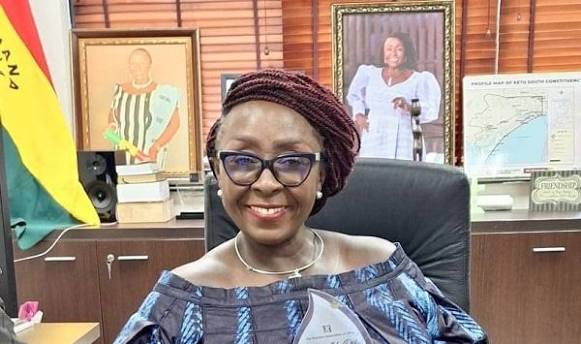
The Minister for Tourism, Culture and Creative Arts and Member of Parliament for Ketu South, Abla Dzifa Gomashie, has urged West African leaders to strengthen cooperation in culture and creative industries as a pathway toward economic integration and social unity across the region.
Speaking at the Validation Workshop of the Meeting of Experts and Ministers responsible for Culture, Finance and Social Welfare of ECOWAS–ECOSOC, the Minister emphasized that culture remains one of the most powerful tools for strengthening regional unity and development within .
Culture as a Bridge Beyond Borders
Hon. Gomashie reflected on the founding vision of ECOWAS, established in 1975 to promote economic integration, cooperation and development among West African nations. She stressed that while political borders define modern states, the cultural identity of Africans transcends those boundaries.
According to her, the region shares deep-rooted traditions, languages, arts, festivals and historical experiences that connect people across national lines.
“Culture is the heartbeat of our people. It is the invisible thread that binds our communities from Senegal to Nigeria, from Ghana to Côte d’Ivoire,” she said.
She noted that many ethnic groups in West Africa—such as the Ewe, Akan, Mandé and Fulani—have lived and interacted across borders for centuries, long before modern geopolitical lines were drawn.
For this reason, she urged leaders and policymakers to view cultural cooperation not merely as entertainment or heritage preservation but as a strategic driver of regional integration and economic transformation.
Cultural Economy as a Tool for Regional Growth
The Minister highlighted the growing global significance of the creative economy, explaining that sectors such as music, film, fashion, crafts, literature and performing arts have become major contributors to national economies.
She encouraged ECOWAS member states to invest collectively in cultural industries that can create jobs, promote tourism and expand economic opportunities for young people across the region.
Hon. Gomashie pointed to the success of the recent held in , describing it as a powerful example of how cultural festivals can bring together artists, entrepreneurs and tourists from across West Africa.
According to her, such platforms showcase the creative potential of the region while strengthening cultural diplomacy and regional solidarity.
“These initiatives demonstrate that culture is not only about identity and heritage; it is also about economic opportunity and sustainable development,” she stated.
Building an African Cultural Identity Without Barriers
Hon. Gomashie further emphasized the need for a unified African cultural identity that transcends political and geographical divisions.
She said West Africa’s rich traditions—from music and storytelling to traditional fashion and cuisine—represent shared assets that can strengthen cooperation among nations.
By promoting cross-border cultural programmes, artist exchanges and joint festivals, she said ECOWAS countries can deepen mutual understanding and strengthen people-to-people connections.
The Minister also urged governments to integrate cultural policies with finance and social welfare strategies to ensure that cultural development contributes meaningfully to poverty reduction and social inclusion.
Nkrumah’s Vision for African Unity
In concluding her remarks, Hon. Gomashie invoked the words of , who championed the vision of African unity.
Quoting the late Ghanaian leader, she reminded participants that:
“I am not African because I was born in Africa, but because Africa was born in me.”
She said the statement reflects a powerful reminder that African unity must be driven by shared values, culture and collective purpose.
Regional and International Participation
The workshop brought together ministers, policy experts and international stakeholders from across West Africa.
Participants included representatives from the , the , and the .
Officials from the and the also participated, highlighting the growing recognition that cultural development must be supported by strong economic and financial frameworks.
Toward a United Cultural and Economic Future
Hon. Gomashie concluded by calling on ECOWAS member states to strengthen collaboration and build policies that promote cultural exchange, regional tourism and creative entrepreneurship.
She stressed that the future prosperity of West Africa will depend not only on political cooperation but also on the ability of nations to harness their shared cultural heritage as a foundation for economic integration and unity beyond geopolitical boundaries.
Source News Volta