Stakeholders are raising alarms over the rise in female genital schistosomiasis (FGS) at Lakeside communities within the Volta Basin in the wake of the Akosombo Dam spillage.
The river-borne tropical disease, known as bilharzia, holds a significant share in causes of infertility and maternal morbidity, although registered among neglected tropical diseases (NTDs).
Mr Ben Sackey, the Director, Environmental and Sustainable Development Department of the Volta River Authority (VRA), said schistosomiasis was a “major challenge” that came with the construction of the dam, and is now feared dominant in over 400 communities in five regions sharing the Volta Basin.
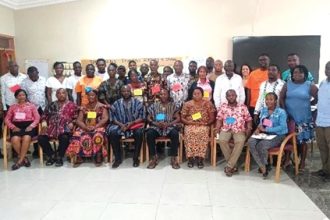
The Director was delivering an address at a symposium in Ho to mark the 2024 World NTDs Awareness Day.
He said the evading floods from the spillage carried along aquatic weeds bearing snails that carried the schisto worms.
“With the flood waters was the movement of the water weeds which harbours the schisto snail vector. What it means is that the weeds could now find themselves, in communities where hitherto, were not there.”
Speaking on plans for the control of post spillage, Mr. Sackey noted the inception of a baseline study on the spread of infection, which was being undertaken by the University of Health and Allied Sciences under an MoU with the VRA.
He said the provision of sanitary facilities including drinking water for affected communities was being sustained, while partnerships with the health authority continued to enable mass drug administration in hundreds of lakeside communities.
Projects including the dredging of the lower Volta are expected to take off soon, and the Director spoke of “a recent partnership” with the Massachusetts Institute of Technology and the KNUST to develop economic value for aquatic weeds.
Professor Morhe, Head of Obstetrics and Gynaecology at UHAS, said the waterborne tropical infection was first reported in 1899 in Egypt, and presently remains “the most neglected gynaecological condition in sub-saharan Africa”, affecting over 50 per cent of females.
He noted increased risk among women and girls in underdeveloped countries, counting an estimated 56 million in Africa south of the Sahara.
Blood flukes, known as the trematode worms, are parasites, and which Prof Morhe said could retain a lifespan of more than 40 years in a human host.
Common complications include infertility, ectopic pregnancies, preterm and underdeveloped babies, and HIV.
Prof Emmanuel Morhe said the release of inflammatory cells by the parasites attacked all foreign protein in the female fertility organs including fertilised ovaries, thereby affecting the menstrual cycle and ovulation.
He said a study conducted in eleven communities in the Volta basin showed that 36.21 per cent of the 400 women surveyed had the disease and was prevalent within the age brackets of adult teens and young adults.
Prof. Morhe added that the number of affected persons in the Volta basin remained unknown, and that stakeholders should consi
Source Ghananewsonline