By Hebrews Pouyeli Kumako
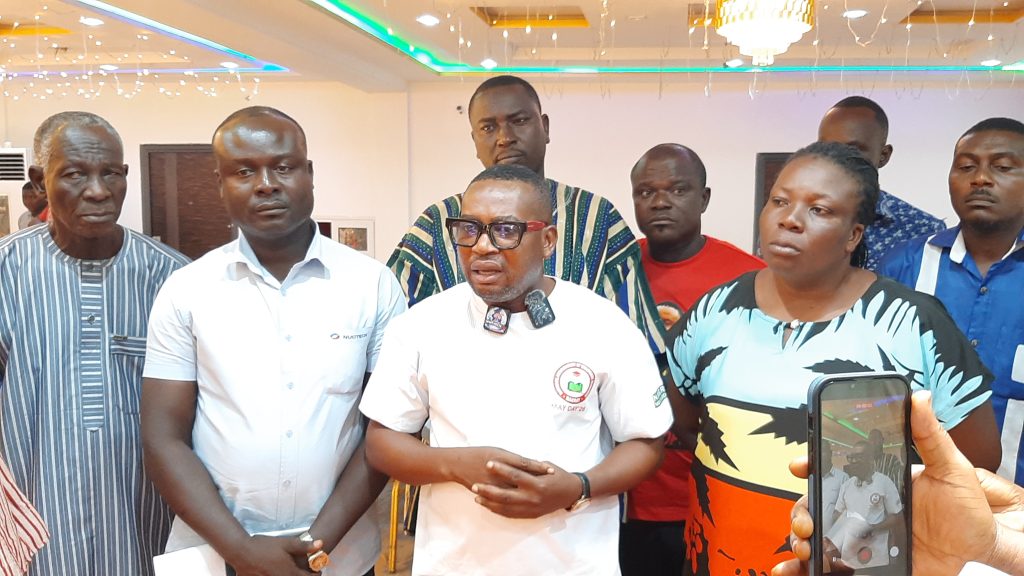
Tensions are rising within the Aflao Traditional Area as some Assembly Members have publicly accused the Ketu South Municipal Chief Executive (MCE), Hon. Nicholas Worclachie, and the Municipal Coordinating Director Mr. Emmanuel C. Ikpe of allegedly sidelining Aflao in the distribution of the District Assembly Common Fund and government development projects.
According to the concerned Assembly Members, residents and traditional leaders in Aflao are increasingly dissatisfied with what they describe as an unequal allocation of resources under the current administration, raising fears that the municipality’s largest and most economically strategic enclave is being denied its fair share of development under the current National Democratic Congress (NDC) government.
The Assembly Members claim that since Hon. Worclachie assumed office, several key municipal projects that were expected to benefit Aflao have instead been redirected to other traditional areas, particularly Klikor and neighboring communities, leaving many residents frustrated and concerned about what they perceive as growing development imbalance.
The aggrieved members allege that Aflao, despite being the commercial heartbeat of the Ketu South Municipality and Ghana’s main eastern border town, has not received development attention proportionate to its economic importance, population size, and contribution to local revenue generation.
They argue that projects funded through the Common Fund and other Government of Ghana (GoG) interventions should reflect fairness and inclusivity, rather than what they describe as selective concentration in a few preferred traditional areas.
“We are not happy with the current leadership when it comes to the allocation of funds and developmental projects. Aflao deserves better and must not be ignored,” one Assembly Member reportedly stated.
Fear Over Aflao’s Share Under Current Administration
The Assembly Members say there is growing anxiety among residents that Aflao may continue to lose out on critical infrastructure and social investment if current patterns persist.
According to them, the concern is not only about physical projects but also about the broader perception that Aflao’s developmental priorities are being overlooked despite its strategic role in trade, immigration, and national security.
Some residents reportedly fear that if urgent corrective measures are not taken, the traditional area could be denied its rightful benefits under the current administration.
The Assembly Members are calling for greater transparency in project selection, budgeting, and the disbursement of public funds across the municipality.
They are urging the MCE and the Municipal Assembly to provide a clear breakdown of projects undertaken, their locations, and the criteria used in determining where development initiatives are implemented.
They also want assurances that future allocations will reflect balanced development across all traditional areas within Ketu South.
The allegations are expected to intensify political debate within the municipality, particularly as residents and stakeholders continue to monitor how public resources are distributed.
While the Municipal Chief Executive and the Coordinating Director have not publicly responded to the concerns, the issue is likely to draw significant attention from traditional authorities, political actors, and civil society groups demanding accountability and fairness.
For many residents in Aflao, the central message is clear: development must be inclusive, transparent, and equitable—ensuring that every community receives its fair share of government investment.
Source News Volta