By Hebews Pouyeli Kumako
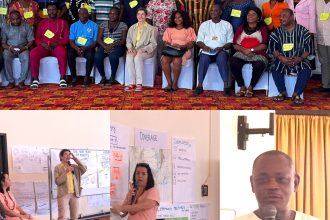
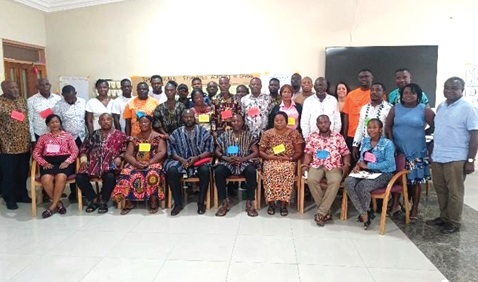
Thirty-four fishery actors drawn from Ghana’s four coastal regions have completed a capacity-building workshop under the newly launched Small-Scale Fisheries Academy (SSF Academy), aimed at promoting fisheries co-management, sustainable fishing practices, and better understanding of the
Fisheries and Aquaculture Act, 2025 (Act 1146)
The training, held in Winneba from 30th June to 3rd July 2026, was facilitated by Maria Fernanda of Mundus maris, brought together canoe owners, chief fishermen, fish processors, traders, and other stakeholders from fishing communities across the
Volta Region, Greater Accra Region, Central Region and Western Region.
The academy marks the beginning of a one-year partnership between Mundus maris and the
Canoe and Fishing Gear Owners Association of Ghana (CaFGOAG). The initiative seeks to empower fishing communities to identify and implement locally driven solutions that complement government efforts to restore declining fish stocks and improve livelihoods.
Participants received training on the provisions of Act 1146, community facilitation skills, fisheries co-management, marine conservation, and strategies for increasing voluntary compliance with fisheries regulations.
According to Maria Fernanda “This academy is not about imposing rules on fishing communities. It is about creating dialogue and helping fishers become active partners in managing the resources they depend on. The knowledge and experience of fishers are essential for the future of Ghana’s fisheries.
Some participants welcomed the training but also expressed concerns about the practical implications of the new fisheries law.
“The training has helped us understand that fish processors and traders also have responsibilities under the law, including proper record keeping and handling of fish products. We need continuous education in our communities.”
“We now better understand the law, especially issues about registration, protected areas, and endangered species. But many fishermen are worried about how these regulations will affect their daily income if adequate support is not provide
Madam Ruby, Fish Processor from the Volta Region said “Fish processors are also affected when fish stocks decline. We support efforts that will ensure there is enough fish for our businesses and for future generations.”
The press statement noted that years of illegal, unreported, and unregulated (IUU) fishing have significantly reduced marine productivity in Ghana. The Fisheries Commission estimates that the country imports approximately 80,000 tonnes of fish annually, highlighting the need for stronger conservation measures.
Organizers commended the Ministry of Fisheries and Aquaculture and the Fisheries Commission for initiatives such as closed seasons, anti-IUU campaigns, and the establishment of marine protected areas.
Speaking at the workshop, Wisdom Pazzy Mordedzi and Nana Kweigyah, the National Coordinators of SSF Academy and leaders of CaFGOAG , said the academy seeks to equip local fish actors with the knowledge and skills needed to become effective community facilitators.
“Our goal is to help fishing communities take a more active role in managing the fisheries resources on which their livelihoods depend. Sustainable fisheries cannot be achieved by government alone; communities must be at the center of the solution,” both stated.
The Executive Director of the Fisheries Commission, Prof Benjamin Betey Campion, during the training has stated that only community-led approach can reverse the rapid decline of the country’s marine resources and protect the livelihoods of thousands of artisanal fishers.
He has therefore commended the Canoe and Fishing Gear Owners Association of Ghana (CaFGOAG), and Mundus Maris for the Small Scale Fisheries Academy initiative which places fishing communities at the heart of fisheries management towards rebuilding the nation’s fisheries .
As part of their commitment, the 34 trained fishery actors pledged to establish monthly dialogue platforms in their communities. These meetings will bring together chief fishermen, canoe owners, fish processors, traders, and other fish workers to discuss local challenges and engage with fisheries authorities.
The SSF ACADEMY is expected to Improved understanding of Act 1146, Greater voluntary compliance with fisheries regulations, Stronger community participation in fisheries management, Protection of breeding grounds and fish stocks and Better livelihoods for fishers and fish workers.
The organizers said the partnership is open to collaboration with universities, traditional authorities, civil society groups, and development partners committed to securing a sustainable future for Ghana’s small-scale fisheries.
Source News Volta