As part of activities marking the 2025 International Anti-Corruption Day, the Ketu South Municipal Office of the National Commission for Civic Education (NCCE) has taken its anti-corruption advocacy to the grassroots, engaging pupils of St. Peter Wender’s Basic School in Aflao and Chicago Basic School, Denu, in a civic sensitisation programme aimed at nurturing integrity from an early age.
The outreach, held on December 12, 2025, was organised under the global theme “Uniting the Youth Against Corruption: Shaping Tomorrow’s Integrity.” It sought to empower schoolchildren to identify corruption, resist it, and take responsible action within their schools and communities.
Building Integrity From Childhood
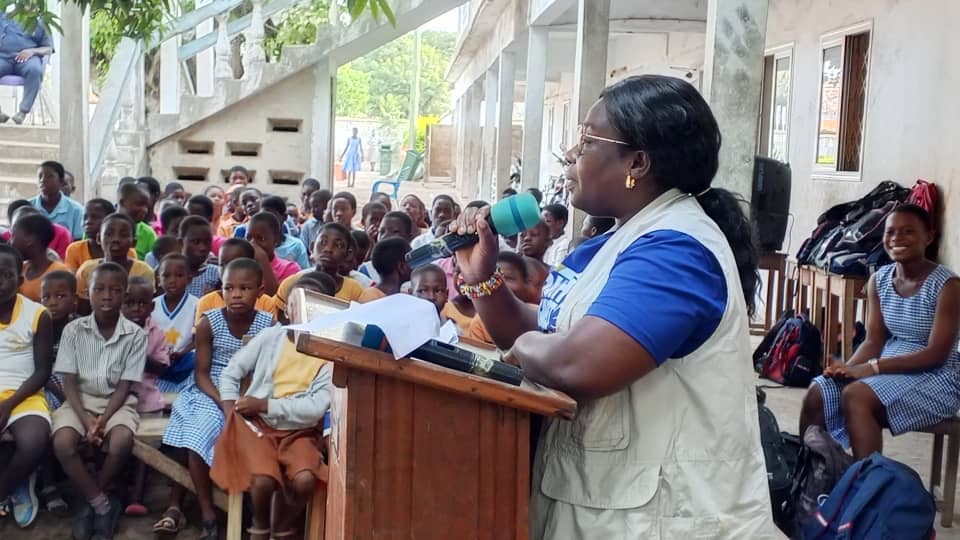
Addressing the pupils, Mama Hodzige II, Municipal Director of the NCCE, stressed that the future success of Ghana’s anti-corruption fight depends heavily on how today’s youth are educated and guided.
She explained that corruption often flourishes because people choose silence over action, and urged pupils to develop the courage to speak up whenever they witness dishonest practices.
“If we train children to value honesty and fairness today, we secure a better Ghana tomorrow,” she said.
Mama Hodzige II highlighted common forms of corruption that pupils may encounter, including examination malpractices, falsification of grades, bribery, favouritism, and cheating, cautioning that such acts erode trust and undermine fairness in society.
Responsible Use Of Social Media
The NCCE Director also cautioned pupils on the use of social media, noting that while digital platforms can spread misinformation and negative behaviour, they can equally serve as tools for promoting accountability, transparency, and good citizenship when used responsibly.
She encouraged pupils to ask questions, show interest in decision-making processes, and hold leaders and duty bearers accountable, describing civic participation as a powerful weapon against corruption.
Protection For Whistleblowers
To allay fears, Mama Hodzige II assured pupils that Ghana’s Whistleblowers Act, 2006 (Act 720) protects individuals who report corrupt practices, urging them not to be afraid of victimisation when standing up for what is right.

High Enthusiasm And Positive Impact
The News Volta observed strong enthusiasm among both pupils and teachers, with learners actively participating in discussions on honesty, fairness, and civic responsibility.
Some pupils shared that the programme had deepened their understanding of how corruption affects development, poverty reduction, and equality, noting that the fight against corruption is not only for adults.
“We now know that corruption affects our future too, and we also have a role to play,” some pupils remarked.
To encourage participation, pupils who correctly answered questions on corruption-related issues were rewarded with pens and branded shirts.
Broad Support For Youth Anti-Corruption Drive
The 2025 anti-corruption education programme is sponsored by the Ghana Anti-Corruption Coalition (GACC), with support from partners including GIZ, the European Union, the William and Flora Hewlett Foundation, and the Ministry of Finance.
The sensitisation exercise forms part of broader national efforts to empower young people to reject corruption, speak up against wrongdoing, and help build a future anchored on integrity, accountability, and responsible citizenship.
Through initiatives like this, the NCCE continues to reinforce the message that the fight against corruption must begin early—and that Ghana’s youth are central to shaping a more transparent and just society.
Source Hebrews Pouyeli Kumako // News Volta