By News Desk
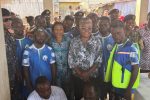
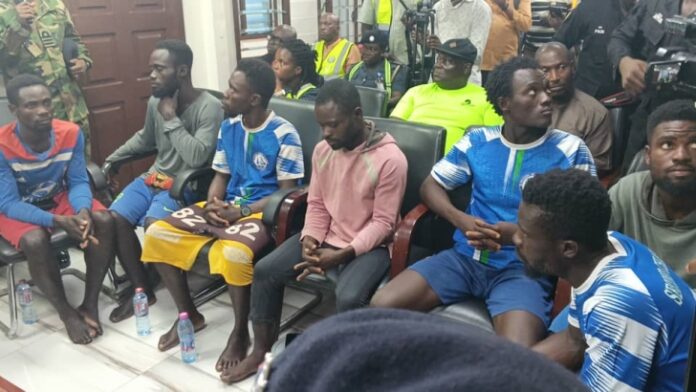
Seven Ghanaian fishermen aboard the fishing canoe Second Chance have been rescued in Togolese territorial waters after spending 12 days stranded at sea, bringing an end to an ordeal that triggered a coordinated search involving Ghanaian security and maritime agencies and neighbouring authorities.
The crew departed Sekondi on October 9, 2026, for a fishing expedition, but their journey took a dangerous turn when their canoe suffered engine failure shortly after setting sail. Unable to return to shore, the fishermen drifted more than 120 nautical miles from their intended fishing grounds, eventually entering Togolese waters.
With their food and drinking water exhausted, the crew faced mounting uncertainty as efforts to establish their precise location proved difficult.
The rescue was confirmed on Wednesday, October 21, by the Executive Director of the Fisheries Commission, Prof. Benjamin B. Campion, and the Western Regional Minister, Joseph Nelson. The fishermen were reported to be in good health and had received food, water and medical attention.
The search operation gathered momentum after the canoe’s owner, Nana Kweku Atta, reported the vessel overdue at the Fishing Harbour Police Station in Sekondi on October 18. A coordinated search began the following day.
The operation involved the Ghana Navy, Marine Police, Ghana Maritime Authority (GMA), Fisheries Commission, National Security agencies and local coastal communities.
Search teams initially struggled to establish the crew’s location because information communicated by the lead fisherman did not correspond with the landmarks described. The crew reportedly indicated they were about 41 nautical miles south of Aflao, but references to a nearby lagoon and anchored ships raised suspicions that they might be much farther east, around the Keta and Tema coastal areas.
Communication difficulties, including network limitations and language barriers, further complicated coordination.
The GMA subsequently mobilised local fishermen from Aflao to assist in searching the suspected area. On Wednesday, the authority deployed the naval vessel GNS Aflao, carrying Marine Police officers and medical personnel, as the search intensified.
National Security agencies also attempted to trace the fishermen’s mobile phone signals to help determine their whereabouts.
The breakthrough came after the canoe’s presence in Togolese territorial waters was confirmed and the Togolese Navy was alerted. Maritime authorities in the neighbouring country intervened and rescued the stranded crew.
Although direct communication with the fishermen remained difficult, the canoe’s owner managed to establish contact with them.
The men were provided with essential supplies and were being brought ashore by French-speaking maritime authorities believed to be from Togo or Benin. Arrangements were expected to follow for medical examinations and their eventual return to Ghana by land.
The rescue underscores the importance of cooperation between neighbouring countries when fishing vessels encounter emergencies beyond their home waters.
The incident also raises important questions about emergency preparedness among Ghana’s artisanal fishing crews, particularly the ability of fishermen to communicate their positions accurately when mechanical failures occur far from shore.
For coastal fishing communities, where livelihoods depend heavily on daily trips to sea, a disabled engine can quickly turn a routine expedition into a prolonged emergency.
Reliable communication equipment, emergency supplies, access to distress-reporting channels and timely reporting of overdue vessels are therefore critical safeguards for fishing crews.
The successful rescue of the Second Chance crew is a welcome outcome for their families and fishing community. It also demonstrates how cooperation between maritime authorities, security agencies and local fishermen can prove vital when lives are at risk at sea.
Source New Volta